GMT (Greenwich Mean Time) and UTC (Coordinated Universal Time) are closely related concepts used for global timekeeping, but they have distinct characteristics.
Greenwich Mean Time (GMT):
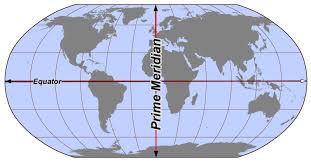
- Definition: GMT is a time zone based on the mean solar time at the Prime Meridian (0° longitude) in Greenwich, England.
- Usage: Historically, GMT was used as the international standard for timekeeping. It is still used in some countries as a time zone.
- Variability: GMT is based on Earth’s rotation, which can vary slightly due to irregularities in the planet’s movement.
Coordinated Universal Time (UTC):
- Definition: UTC is a time standard that is more precise than GMT. It is based on atomic clocks and includes leap seconds to account for Earth’s irregular rotation.
- Usage: UTC is the basis for civil time worldwide and is used for scientific, aviation, and military purposes.
- Consistency: Unlike GMT, UTC does not vary and remains constant, making it ideal for global synchronization.
Key Difference:
- GMT is a time zone, while UTC is a time standard.
- UTC is more accurate and consistent due to its reliance on atomic clocks.
Example:
If the current UTC time is 12:00, GMT will also be 12:00, but during daylight saving time, countries using GMT may switch to a different time zone (e.g., British Summer Time).