
Mathematical Astrology
GMT (Greenwich Mean Time) and UTC (Coordinated Universal Time)
GMT (Greenwich Mean Time) and UTC (Coordinated Universal Time) are closely related concepts used for global timekeeping, but they have distinct characteristics.
Greenwich Mean Time (GMT):
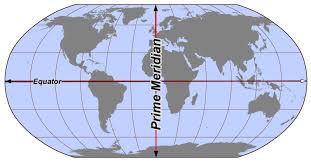
- Definition: GMT is a time zone based on the mean solar time at the Prime Meridian (0° longitude) in Greenwich, England.
- Usage: Historically, GMT was used as the international standard for timekeeping. It is still used in some countries as a time zone.
- Variability: GMT is based on Earth’s rotation, which can vary slightly due to irregularities in the planet’s movement.
Coordinated Universal Time (UTC):
- Definition: UTC is a time standard that is more precise than GMT. It is based on atomic clocks and includes leap seconds to account for Earth’s irregular rotation.
- Usage: UTC is the basis for civil time worldwide and is used for scientific, aviation, and military purposes.
- Consistency: Unlike GMT, UTC does not vary and remains constant, making it ideal for global synchronization.
Key Difference:
- GMT is a time zone, while UTC is a time standard.
- UTC is more accurate and consistent due to its reliance on atomic clocks.
Example:
If the current UTC time is 12:00, GMT will also be 12:00, but during daylight saving time, countries using GMT may switch to a different time zone (e.g., British Summer Time).